Sunday, October 5, 2014

"Was there a Great Apostasy?" A great review from Soul Device


Some kind of “apostasy narrative” is required to explain why a group that did not exist for nearly 2,000 years can consider itself the true expression of Christianity. Obviously, if the Church founded by Jesus did not go into apostasy, there would be no excuse to create a new group or “restore” what was “lost.” Unlike most Christian sects that attempt to locate themselves (in some form) throughout Christian history, the Mormons accept and explain their non-existence by claiming the Church founded by Jesus Christ disappeared from the Earth shortly after its creation.
I wrote previously of the problem of the Latter-day Saint (LDS or Mormon) story of a “great apostasy” of the early ChurchHERE. Now I would like to expose some of the errors of the primary text used by the LDS in support of such an idea: Mormon Apostle James E. Talmage’s book The Great Apostasy: Considered in the Light of Scriptural and Secular History (hereafter: “TGA”). Written in 1909, the point of Talmage’s work was to present “the evidence of the decline and final extinction of the primitive Church” as evidenced by “scriptural record and in secular history.” The reason this alleged apostasy is so important to Mormons is that it under girds their movement’s very existence. This is admitted on the very first page of TGA:
If the alleged apostasy of the primitive Church was not a reality, the Church of Jesus Christ of Latter-day Saints is not the divine institution its name proclaims. (TGA, Preface – emphasis added)

Read more at: http://souldevice.wordpress.com/2014/10/04/was-there-a-great-apostasy/

Friday, July 11, 2014

Mormon Deification and Orthodox Theosis

The LDS church recently published an article that sheds light on the the LDS view of becoming like God. This effort to clarify a difficult and misunderstood aspect of the tradition is laudable and I look forward to seeing what else the LDS church has to offer in the future. That said, I was moved to write this post by the way in which the author uses the Early Church Fathers to make his/ her case and the comparison of the LDS tradition to Eastern Orthodoxy.

First referenced is this passage from Irenaeus' Against Heresies:

 "For it is thus that you will both controvert them in a legitimate manner, and will be prepared to receive the proofs brought forward against them, casting away their doctrines as filth by means of the celestial faith; but following the only true and steadfast Teacher, the Word of Godour Lord Jesus Christ, who did, through His transcendent love, become what we are, that He might bring us to be even what He is Himself."

Comparing LDS and Orthodox Christian views of deification is a wonderful example of the importance of defining terms and theological background since both faiths can endorse the statement "
our Lord Jesus Christ, who did, through His transcendent love, become what we are, that He might bring us to be even what He is Himself" while understanding it completely differently.

Members of the LDS faith believe that God the Father and the Son are both beings with an immortal body of flesh and bone. One might say the Father and Christ are the perfection of human evolution in the LDS view. Thus when a Mormon says that Christ died so humans can become like Him they mean this in a much more literal way than traditional Christians (Christians who believe the faith as stated in the Nicene Creed); they will be not only just like Christ, but also the Father who has a physical body akin to theirs.

To understand why traditional Christians understand Irenaeus' statement, and deification in general, differently than the LDS faith, one must understand how they view the Holy Trinity. For traditional Christians, God is the foundation of all that exists, the wellspring from which everything is created and sustained; He who is everywhere present, filling all things. Thus God is not just different from us in degree (as is the case in the LDS faith) but different in kind. He is not constrained by the spacio-temporal aspects of our material existence because he is the creator and sustaining force of our universe. We cannot ever be just like God because, by our nature, we are forever dependent upon him.

That said, God's creation reveals to us certain aspects of His nature, and this is especially true in the case of humans who are the pinnacle of God's creative work. In the traditional Christian view, when God says "let us make man in our image" He is referring to the mental and spiritual characteristics of humanity which makes it different from God's other creatures not only in degree, but in kind. Our self-consciousness, will, and immortality are the ways in which our image is similar to God's.

It is tempting to interpret the use of the term "image" as used in Genesis in a materialistic way. After all, the images we encounter most often are physical depictions. However "image" or "likeness" need not refer to physicality. If my mother tells me I remind her of her grandfather, this does not necessarily mean I resemble him physically. It may be my voice or personality that makes our "images" similar. 


Likewise, Irenaeus leaves open to interpretation what he means when he states Christ becomes what we are so we might become what He is. Mormons interpret this in a more expansive manner; we will become exactly what Christ is, save for unique physical and personality characteristics. For traditional Christians, Irenaeus is telling us that through Christ we too can become sons and daughters of God, but sons and daughters that will always be different in kind and dependent upon the Grace of the Father, the Son, the Holy Spirit.

Mormons and Orthodox Christians both believe that we can become like Christ, but mean very different things. The LDS Church believes we can be like Christ in both His human and His divine nature, whereas Orthodox Christians believe, being dependent material creations, we share only in Christ's human nature, a human nature which itself can be perfected or divinized.

Change of name and intention

After a long period of discernment I have become an Orthodox catechumen. Having, in a sense, become more settled in my journey (although recognizing the journey has just begun) I have decided to steer this blog in a direction different than it has taken in the past. As I am now convinced of Orthodoxy's truth I have much less interest in actively criticizing the merits of the LDS faith and other faiths. I also question what I can offer that has not already been provided by better voices. I hope to offer something a bit less prevalent in the blogosphere- my perspective as a 6th generation cradle Mormon who converted to Eastern Orthodoxy. I imagine this will primarily consist in commentary on things Mormonism and Orthodoxy, especially where there is overlap between the two.

From here on out my blog will be known as Mormon to Orthodox rather than Comparative Religion to fit its new direction.

In Christ,

MtO

Monday, February 17, 2014

Personal revelation (subjective experience) as the basis of conviction.

Living in an area where much of the population is LDS provides a unique atmosphere where discussions on topics related to religious belief often arise. A few of my closest LDS friends and I have pressed one another on such matters to points that might make others feel uncomfortable or violated. Both sides usually begin these conversations by appealing to less subjective factors like history, science, and philosophy. Occasionally, though, a Mormon friend eventually claims that their primary, and sometimes only reason for believing rests on what they call a personal revelation or personal witness. I can sympathize with such claims since I too see experience as essential to one's spiritual life; however I am convinced that insurmountable problems arise for those who rely on subjective bases alone or when other factors clearly contradict their interpretation of their subjective experience.

For instance, imagine there are three women, one Muslim, one Christian, and one Jewish. They all claim that they know their religion is true because God has shown this truth to them through personal revelation. However, all three of these faith traditions have competing claims. If Jesus is in fact the divine Son of God, then Islam and Judaism are, at least in this regard, in error. Likewise, if Muhammad is God's last prophet, then Judaism and Christianity are in error. Put simply, not all of these women can be equally correct in their convictions. Figuring out whether a faith tradition is true can be difficult (some might say impossible) work, so the three women might settle for saying "my faith is right for me, but maybe yours is right for you." Under such a view religious affiliation becomes little more significant than one's preferred color or food. Additionally, the claim of the LDS faith and many other faith traditions is a strong, authoritative one. The LDS faith, according to its official doctrines, claims not to be just one of many different-but-equal options, but the most true religion. Such a claim, as any good debater or philosopher knows, places the burden of proof on the LDS faith.

"The LDS church is true because the Holy Spirit revealed to me that it is so" and similar claims cannot be used to surpass this burden of proof since such a claim is relevant only to the subject making the claim. One can always fall back on "try it for yourself and then you will see," but what if the individual challenged does try and still isn't convinced? I doubt members of the LDS faith would be comfortable concluding that this disproves their faith tradition.

Authoritative claims require proofs or arguments that are understandable and sound to all parties involved in a dialogue. I invite LDS voices to respond to my post so that I might better understand why Mormons stay Mormon and so I might be corrected where I have made errors in this post.

Tuesday, September 3, 2013

"Why do I do what I do?" or, "What motivates my decisions?"

The recent discussion in the comments section of a previous post has me wanting to further explore why exactly it is we make the decisions we do and incorporate these thoughts into the universalism debate.

As far as rational humans are concerned, I believe the motives an individual has for choosing x are quite limited. Taking ice cream as an example, an individual will choose or not choose a flavor depending on the foreseen consequences of such a choice. In scenario A, an individual chooses mint chocolate chip because he sees it as a good or desirable choice. Perhaps it is his favorite flavor, or perhaps he chooses it because he has never tried it before and wants to expand his horizons. Regardless of his motives, what we can almost certainly say is that he will not make a choice that he sees as harmful. If our subject knows mint chocolate ice cream causes him to break out in a painful rash, if it tastes like bile, or any other of a number of unpleasant possibilities, it is very probable, if not guaranteed, that he will not select that specific flavor.

Rational human beings do not typically choose things that are undesirable simply because they are undesirable, and as the level of undesirability increases, the likelihood that it will be chosen decreases. Our very nature and biological make-up screams out at us to avoid such decisions. As you read this you may think to yourself "I could go make an undesirable choice right now if I so wished." Perhaps you have in mind touching a hot stove and you think this would prove my case wrong, but keep in mind that, while burning your hand in and of itself is undesirable, the further satisfaction of winning an argument turns this action into one that is desirable. I am confident that you would not intentionally hold your hand to a hot stove if not for some sort of satisfaction. Our motives cannot be separated from the berceived outcomes and subsequent benefits that arise from such a decision.

Let us now incorporate the above into the question of who goes to hell and why they go to hell. Within what may be called the high church circle, comprised of (but not limited to) Anglicans, Catholics, and Orthodox Christians is an idea that God does not forcefully send souls to hell against their own will. Instead, those who find themselves in that most horrendous of states are there by their own choosing. As C.S. Lewis states in The Great Divorce, the gates of hell are locked from the inside, by those who choose by their own volition to remain in their suffering.

This view is a lot more easy to swallow than the idea that God forces us into the abyss against our own will, but upon closer examination I believe it may make less sense. If we hold that to really choose something, in a "you are responsible for your decisions" sort of way, is to understand what you are choosing, it becomes difficult to imagine how choosing eternal damnation could even be a possibility. If we say that hell isn't actually that bad, perhaps akin to Mormonism's Telestial kingdom where souls can still be happy, then the choice seems much more plausible, but most Christians want to maintain that hell consists only of suffering, perhaps the worst sufferings imaginable. Could an individual in possession of their faculties really choose endless suffering?

Perhaps one could fall into eternal suffering as a result of insanity, but would a good God allow such insanity to persist? Perhaps an individual could initially reject God but eventually regret his decision. Does God's mercy and willingness to forgive cease after death? Perhaps we lose our ability to choose after death. Without free will, can we still be considered human?

We make our choices based on perceived desires. Seeing that the characteristics of hell make it less desirable than eternal joy or peace it necessarily follows that a rational human being will not make a decision that will leave them without satisfaction.

I would like to note that my inclination towards Christian Universalism is not rooted in its being easy. I have altered my opinion of difficult things before after considering the arguments for and against (abortion, homosexuality, pornography, masturbation). I am a universalist for the same reason I am pro life. I considered the arguments both for and against and found universalism more compelling, both intellectually and emotionally. That being said, I strive to be open to changing my perspectives if they are false and for this reason I welcome any comments on this matter.

Saturday, August 10, 2013

The not-so unique beliefs of Latter-day Saints

Many of my LDS friends and acquaintances are familiar and well-read in both their own and other faith traditions. They are aware of the problematic aspects of LDS history and some even acknowledge problems in LDS theology that lead them to question and struggle with their faith; however they persevere and choose to remain faithful in spite of these struggles. One reason that has been given for this continued commitment is the unique truths that the LDS Church has revealed and/ or preserved. There are certainly things unique to the LDS tradition, and the specific amalgamation of beliefs is certainly unmatched, but taken individually many of these supposed truths are seen to be more of a polemical misunderstanding or can be found in other faith movments and traditions that predate the foundation (or restoration if you believe the claims of Joseph Smith Jr.) of the LDS faith. In this post I will look at just a few examples: Eternal Marriage, Eternal Families, continuing revelation, and Baptism for the Dead.

Note: I acknowledge the reality that the similarities between the LDS faith and other faith traditions by no means disproves the faith, and are even to be expected if it truly is a restoration of an ancient form of Christianity. My goal in this post is not to disprove the LDS faith, but to reveal similarities between LDS beliefs and the beliefs of other faiths of which people may be unaware.

Eternal Marriage
I think it first important to note that the use of eternal in this phrase is dissimilar from the way in which eternal is used elsewhere. When Mormons speak of Eternal Marriage they do not mean timeless, having always existed as many Christians and other theists often mean when they use the term, but rather everlasting. Thus Eternal Marriage might be better communicated as everlasting marriage, since the classical theist might otherwise think Mormons believe they have always been married to their spouse.

To my knowledge the belief in eternal marriage, at least in the West, is not widespread, but there are two traditions that come to mind that share the LDS belief in eternal marriage: Swedenborgian and Islam.


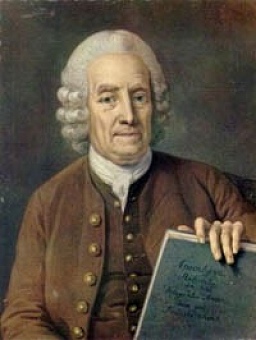
Emanuel Swedenborg
Emmanuel Swedenborg
Swedenborgians, also known as the New Church, is a Christian movement shaped by the writings of the 17th century theologian Emmanuel Swedenborg. In his work The Delights of Wisdom Pertaining to Marriage Love, Swedenborg states "Marriage that is truly spiritual lasts forever, even in heaven after death. There, the two remain male and female as to form, and become one angel as to their soul. As a couple they live a life of useful service in the Lord's Heavenly Kingdom, which is perfected to eternity. If a person dies unmarried he or she will find a spouse in heaven." While this statement highlights some differences between the LDS and Swedenborgian concept of heavenly marriage, it also highlights striking similarities, such as the idea that those who do not marry on earth will marry in heaven.

A major part of the Islamic view of heaven is the idea that one will experience both spiritual and physical pleasures in their heavenly bliss, marriage being included among these pleasures. The website Questions on Islam has the following to say:

"Eating, drinking and marrying are regarded among the highest bounties of Paradise. According to the statements of the Quran and hadiths, the family life that is established in the world will continue forever if both spouses deserve to go to Paradise; their marital relations will go on endlessly..."

and

"The believing men and women who died before they got married in the world will be married in Paradise; all of the single people will be married there."

The Christian belief in temporal marriage, and how it is often misunderstood by Mormons

The popular position pertaining to marriage, being that marriage ceases at death, stems from Matthew 22:30, where Christ states "For in the resurrection they shall neither marry nor be married; but shall be as the angels of God in heaven." Because of the unique way in which Mormons are conditioned to view marriage, the idea of marriage ending is a horrible thought. I wager that this is so because Mormons equate marriage ending with two individuals being separated from one another. By better understanding the traditional Christian understanding of marriage, one discovers that the relationship between a husband and wife in this life does not end at death, but is instead transformed. This is because of what sort of thing the marital union is, according to the Christian.

In the Christian worldview, marriage carries with it several purposes. It is a monasticism of sorts wherein the individual is able to learn to better love and serve another, overcoming the vice of self-centeredness and allowing one to grow closer to God. Marriage also acts as a conduit for the creative powers that allow for the nurturing of new souls that can come to know God and eventually live in his presence. Thus the purpose of marriage, and thus the kind of thing marriage is, is to unify one's self to another individual in a way that distinct from other relationships one may have and provide a nurturing environment for any children that may result from this union. In light of this definition one can see reason Christians don't believe in marriage in heaven- it isn't needed. Unity will have been achieved and procreation will no longer be necessary. This does not mean that one will no longer know and love their former spouse. They may even spend time together, walking around heaven hand in hand. Who knows? It just means their union will no longer meet all the requirements for what a marriage is, and thus will not be a marriage in this sense. 

Eternal Families

Much of what has been said above regarding Eternal Marriage can be applied to the idea of eternal families. It is not that Christians and other non-Mormon faiths deny that we will be together in heaven; instead it is that they understand the nature of these families differently. Mormons believe that, in order for the family bond to be preserved in the hereafter, a special rite called "sealing" must be carried out. Traditional Christians and individuals of other faith traditions believe that no such rite is necessary. If you make it to heaven you are automatically integrated into one big happy family consisting not only of the family members you had on earth, but everyone else in heaven as well.

For further reading on this subject, my friend at "Saints and Saints" has written a post titled Top 11 Things Every Mormon Should Know About Eastern Orthodoxy in which he addresses this subject.


Baptism for the Dead

The reasoning behind this practice is pretty straight-forward. Christ and his disciples teach that one must be baptized to enter into the Kingdom of Heaven. Since baptism, from the earliest days of the Christian movement, has been done by water, many Christian faiths have continued this practice. Where the LDS faith is unique among modern Christian faiths is their practice of baptizing on behalf of the deceased.

Christ's very words explicitly command baptism: "Very truly I tell you, no one can enter the kingdom of God unless they are born of water and the Spirit." (John 3:5, NIV) Either salvation is limited to the relatively few humans who have been baptized by water during their mortal existence, Christ's words here are not to be taken literally, or there must be a means by which those who have died may be baptized. Many Christians, uncomfortable with the idea that salvation should be a lottery of sorts, or completely predestined against our will, have rejected the first view. They may say that only those who know they ought to be baptized must be baptized. Others argue that there is more than one way to be baptized. Some are baptized by water while others experience a spiritual baptism in the life to come. Regardless of which idea they choose, it seems difficult to get around Christ's own words.

The LDS faith believes they have solved this problem through the practice of Baptisms for the Deam, a ritual in which a living person is baptized in the name of a deceased individual. Other faiths, including early fringe Christian sects, the New Apostolic Church, Old Apostolic Church, and the non-Christian Mandaeans in Iraq also have a similar practice. On one level this ritual makes a great deal of sense, especially in light of Christ's statement; however there remain two problems. First, only those for whom the LDS church has genealogical records may have this baptism-by-proxy done in their name. This means that the vast number of individuals who have and will come into the world that evade the LDS radar are still out of luck. Second, when a person is baptized, it is their whole person, body and spirit, that is being immersed. It seems that in order for a baptism-by-proxy to be efficacious, the spirit of the deceased individual would have to somehow become the person being baptized, which I believe the LDS faith rejects.


Conclusion


In 7,000 years of recorded human history various religious and spiritual ideologies have arisen. It is no surprise, then, that the LDS faith is found to be less unique in some respects than many Mormons believe. That being said, it remains unique in its combination of beliefs. 

Thursday, August 8, 2013

The Bishop of Rome in the Early Church

Introduction
Numerous issues and disputes prevent reconciliation of the Roman Catholic and Eastern Orthodox communions. Among these issues and disputes none is more crucial than the role the Roman Church and its bishop ought to play in the Christian Communion as a whole.

The Roman Catholic Church claims that this primacy belongs not to the Church of Rome, but the Bishop of Rome, or Pope, who is held to be the apostolic successor of St. Peter, the prince of the apostles. This primacy is believed by Roman Catholics to carry with it the authority to exercise universal authority over the Christian Communion as a whole. Additionally, since the first Vatican Council held from December 1869 to October 1870, the Roman Catholic Church has declared that, when speaking Ex Cathedra, the Bishop of Rome is able to make infallible decrees, binding on the Roman Catholic Church and Eastern Catholic churches in communion with Rome.  

The Eastern Orthodox Communion acknowledges that the Church of Rome did indeed hold primacy in the pre-schism Church, and many Eastern Orthodox Christians believe that if the Church of Rome reunited with the Eastern Orthodox Communion, this primacy would be restored. It should here be noted that Eastern Orthodox Christianity typically sees primacy as first belonging to the Roman Church and second to its bishop. While there is disagreement among Orthodox Christians regarding what exactly this primacy entailed, they are in agreement that it is not the universal supremacy Roman Catholicism claims it to be.

Better minds than mine have debated the issue of Roman Primacy from both sides of the dialogue for centuries, and thus I likely won't have much, if anything to add to the discussion, but I will offer my unique perspective on the matter. I hope that because I am not yet heavily invested in either tradition I will be able to offer a more fair and impartial consideration of the issue. I welcome any insights, criticisms, and corrections you are willing to offer. 

St. Peter and the Apostles

The Roman Catholic claim of Papal Supremacy is founded primarily on the Apostle Peter and his role among the Apostles and early Church. The first argument typically offered by Roman Catholic apologists is Matthew 16:18-19, wherein Christ claims that He will build his Church upon "Petros" or the rock which seems to indicate Peter. There has been much debate over the true meaning of these verses. Some have highlighted that in Greek, believed to be the original language of the New Testament gospels, two different conjugations of the the word for "rock" are used. From here it is argued that two different metaphorical rocks are being sopken of in this passage. I personally don't find this reality significant for two reasons. First, both uses of the Greek for "rock" seem to indicate Peter. Second, Christ would have spoken Aramaic, a language that has only one word and conjugation for "rock."  

Another area of dispute lies in understanding what exactly Christ is saying to Peter in verse 18. Some, including Early Church Fathers, have argued that when Christ says to Peter "you are a rock, and upon this rock I will build my Church" He is referring to Peter's confession and not Peter himself. While I agree that Peter's confession plays an important role in this conversation, it seems silly to claim that in calling Peter a rock he is referring solely to his confession. If this is so, why did Christ not instead say "your confession is a rock"? Further, why would Peter's name change if it was solely his words and not he himself to which Christ referred? It seems clear that Christ's words refer to the person Peter at least in some sense.

Even acknowledging that Christ is in some sense indicating the man Simon-Peter as the rock in verse 18, there exist two legitimate criticisms of the Catholic interpretation and use of this passage. First, I believe a legitimate interpretation of Christ's statement is "because of your confession of faith you are a rock," and thus anyone else who makes a similar confession is also a rock. At this point the Roman Catholic may object, asking "If that is the case, why is it only Peter's name that was changed?" To this I would reply that Peter's name may not have been changed because he was granted a special authority, but rather as a special recognition that he was the first to make such a confession.

Even though I believe there are criticisms of the Roman Catholic interpretation of Matthew 16:18-19 worth consideration, I am also comfortable accepting that Peter held a special role among the apostles and in the early Church, and, as stated previously, both Roman Catholicism and Eastern Orthodoxy recognize this role. If one grants that Peter was a leader among the apostles and first Christians some may consider the case closed. However, there remain several key questions to consider before considering the matter settled, including a determination of what Peter's leadership entailed, whether he passed on this leadership role, whether the Bishop of Rome and he alone is the successor of Peter in this role, and what this role would entail.

From the perspective of those outside the Roman Catholic Church, the claim of universal jurisdiction and papal infallibility were inventions originating around the time of the Schism and dogmatized at the first Vatican Council, respectively. Rome, however, claims that these Papal roles are legitimate developments tracing back to the very origins of Christendom. In light of this claim, it seems the first place to look in order to solve this question are the writings of the Early Church Fathers themselves. Below I will consider what I believe to be the passages that best support the Roman Catholic case, being that universal Papal jurisdiction and infallibility have existed since the establishment of the Church. These passages will be followed by a personal analysis of said passages:

St. Cyprian of Carthage
“The Lord says to Peter: ‘I say to you,’ he says, ‘that you are Peter, and upon this rock I will build my Church.’ . . . On him [Peter] he builds the Church, and to him he gives the command to feed the sheep [John 21:17], and although he assigns a like power to all the apostles, yet he founded a single chair [cathedra], and he established by his own authority a source and an intrinsic reason for that unity. Indeed, the others were that also which Peter was [i.e., apostles], but a primacy is given to Peter, whereby it is made clear that there is but one Church and one chair. So too, all [the apostles] are shepherds, and the flock is shown to be one, fed by all the apostles in single-minded accord. If someone does not hold fast to this unity of Peter, can he imagine that he still holds the faith? If he [should] desert the chair of Peter upon whom the Church was built, can he still be confident that he is in the Church?” (The Unity of the Catholic Church 4; 1st edition [A.D. 251]).  
Here Cyprian clearly speaks to the Primacy of Peter, which being agreed upon by both East and West is not an issue. What is significant to the disagreement is Cyprian's concluding questions which make the crucial implication that unity with the Chair of Peter is essential. If one understands "the Church" as Roman Catholics, being one, single, universal body headed by one supreme bishop, then the Roman Catholic case seems bolstered. However, if one understands "the Church" as Eastern Orthodox understand the term, meaning one of several bodies of believers headed by the chair and successor of Peter who is that regional church's bishop, then the passage takes on a radically different meaning. Instead of seeing Cyprian's implication as the necessity of being in communion with the Bishop of Rome, one may instead interpret his implication as the necessity of being in communion with one's regional bishop, who is one of several successors of Peter. This interpretation harmonizes with the statement of the historian Jaroslav Pelikan, who referencing Matthew 16:18-19, states "As Roman Catholic scholars now concede, the ancient Christian father Cyprian used it to prove the authority of the bishop—not merely of the Roman bishop, but of every bishop" Pelikan, Jaroslav, The Riddle of Roman Catholicism (NY: Abingdon Press), p. 78.

What the Roman Catholic apologist often omits is that St. Cyprian, who was the Bishop of Carthage, saw himself as sitting in the chair of Peter, believing that all bishops are his successors. His additional statements seem to further refute the idea that he viewed the Bishop of Rome as the modern Roman Catholic Church:


"For neither does any of us set himself up as a bishop of bishops, nor by tyrannical terror does any compel his colleague to the necessity of obedience; since every bishop, according to the allowance of his liberty and power, has his own proper right of judgment, and can no more be judged by another than he himself can judge another." (The Seventh Council of Carthage Under Cyprian, The Judgment of Eighty-Seven Bishops on the Baptism of Heretics, 250 AD) 

I admit that, in light of the Eastern Orthodox perspective, it seems odd that St. Cyprian would state that "there is but one Church and one chair." However, I do not believe that this statement explicitly affirms the Roman Catholic position. Rather, Cyprian may intend to state that there is but one Church under each bishop, to which the adherent is subject and Christians should not divide themselves from this unity. To the Alexandrian, there is only one church to which they should submit, being the Church of Alexandria, and the same would go for the Antiochian, Athenian, Corinthian, and so on. Given his other statements, and his own understanding of Petrine succession, I believe this is a more reasonable interpretation.


St. Irenaeus of Lyons

"Since, however, it would be very tedious, in such a volume as this, to reckon up the successions of all the Churches, we do put to confusion all those who, in whatever manner, whether by an evil self-pleasing, by vainglory, or by blindness and perverse opinion, assemble in unauthorized meetings; [we do this, I say,] by indicating that tradition derived from the apostles, of the very great, the very ancient, and universally known Church founded and organized at Rome by the two most glorious apostles, Peter and Paul; as also [by pointing out] the faith preached to men, which comes down to our time by means of the successions of the bishops. For it is a matter of necessity that every Church should agree with this Church, on account of its preeminent authority [propter potentiorem principalitatem] – that is, the faithful everywhere – inasmuch as the Apostolic Tradition has been preserved continuously by those who are everywhere." 

In claiming that "every Church should agree with this Church," that is, the Church in Rome. Irenaues seems to make the Roman Catholic case for papal infallibility. If it is indeed true that all churches must necessarily agree with the Church in Rome what else can this mean but supremacy? 

This passage has been controversial due to how the Latin phrase "conveniere ad" has been translated. While it is possible to translate "conveniere ad" as "agree with," it is also possible to translate said phrase as "assemble at." In fact, the English word "convene" which is derived from the Latin "conveniere" means "to come together" or "to cause to assemble." Thus a possible translation of this passage is not that every Church should agree with the Church of Rome, but that all Churches should come together or assemble in Rome. For more on this topic I recommend this link, which better explains the Latin Vulgate.
Beyond controversies of translation, it is interesting that Irenaeus points not to the Bishop of Rome, whom Roman Catholics argue holds primacy, but to the Church of Rome, which, according to Irenaeus, it holds due to its faithfulness and not any special, unchanging authority. This emphasis harmonizes with the claim that Rome holds primacy not due to its unique succession, but because of its honorable and political standing in Christendom. Honorable because it was established by, as Irenaeus states, "the two most glorious apostles, Peter and Paul" and because it was often an example of fidelity to Christian doctrine; political because Rome was the seat of the Roman Empire in terms of power and culture. Christians in Rome would have no doubt additionally been praised for their faithfulness under oppression.
   
St. Peter Chrysologus of Ravenna
"We exhort you, honorable brother, to submit yourself in all things to what has been written by the blessed Bishop of Rome, because St. Peter, who lives and presides in his see, gives the true faith to those who seek it. For our part, for the sake of peace and the good of the faith, we cannot judge questions of doctrine without the consent of the Bishop of Rome." [Letter 25:2 to the Priest Eutyches in PL 54:742D-743A]

I personally find this quote to be the most persuasive of the lot. Here St. Peter Chrysologus commands that one should submit to all the writings of Rome's bishop because of St. Peter the Apostle, which implies succession from the Prince of the Apostles. Further, Chrysologus states that decisions regarding doctrine cannot be made without first receiving consent from the Bishop of Rome.

While I do think this quotation lends some support to the Roman Catholic position, it is important to highlight what is not being said and the historical context in which Chrysologus was living. To the former, he makes no mention of infallibility or supremacy so it is unclear as to whether he commands obedience to Rome because of these attributes, or because that particular bishop and his successors, up to that point, have shown themselves to be worthy of submission. In other words we can ask whether the Bishop of Rome is to be followed because he follows church teachings, or because he possesses some special, infallible authority not held by other bishops.

If Rome was seen as a bastion of orthodoxy during the period in which Chrysologus wrote it provides further reasons for why he would give such a command. He may be saying something akin to "Rome has been unwavering in its Christian faith for the past few centuries, and it holds hierarchical primacy among the churches, therefore it is essential that we seek council with Rome before we make any judgments." This view would be one perfectly acceptable to Eastern Orthodoxy.   
_________________
My objective here has not been to prove the opposition's case, as I recognize that the authors of these quotations could very well have viewed the Bishop of Rome in a way similar to the contemporary Roman Catholic Church. Rather, I wish to highlight alternative interpretations to quotations that Catholic pop-apologists so often think are a knock out proof of their position. Contemporary historical consensus among both Roman Catholic and Eastern Orthodox historians seems to be that the early Christian Communion was governed in a much more collegial fashion than the contemporary Catholic Communion, but the Bishop of Rome may yet have held more authority than some Eastern Orthodox Christians are willing to concede.

Although the critic can point to many actual and potential problems stemming from Papal Supremacy, there are many apparent benefits to such a leader. Roman Catholics can much more clearly indicate what their church believes regarding certain moral and doctrinal matters, such as contraception. The unity experienced under the Pope also seems to have allowed for an efficiency of sorts, which may be seen as both a positive and negative attribute. When disputes arise the Roman Church a council is assembled in relatively quick fashion. In contrast, the Eastern Orthodox Communion seems to have been planning their next council for the past 500 years or so, or they claim that another council isn't necessary.

In the end the only question we ought be concerned with in our pursuit for truth is whether the authority held and occasionally exercised by the Bishop of Rome, as claimed by the Roman Catholic Church, has a legitimate historical and theological basis. In light of the above the position seems at best debatable, if not altogether erroneous.

For further information regarding this topic I recommend this audio resource from the Orientale Lumen Conference, where Catholics and Orthodox Christians gathered to discuss the topic "Rome and the Communion of Churches: Bishop, Patriarch or Pope?”